Dengue season comes back to Karachi every year with the rains, but most of the risk sitting in coolers, tyres, and rooftop tanks is largely preventable once you know where to look. This guide walks through the season, how mosquitoes actually breed, a room-by-room checklist, the symptoms worth watching, and what a professional visit adds beyond your own effort. If you would rather talk it through with a technician first, Noor Pest Control answers on 0330-8373324.
Why Karachi’s Mosquito Season Turns Dangerous After the Monsoon
Every year, the dengue mosquito season Karachi households dread arrives right on schedule. Once the monsoon rains ease off, the real risk begins: the post-monsoon season, running from September through October and November into early December, is when dengue cases climb fastest across Sindh. The Pakistan Meteorological Department has flagged Karachi as a high risk, and in some years a medium risk, zone once the weather conditions line up — temperature sitting around 26 to 29 degrees Celsius, humidity near 60 percent, and rainfall above 27mm create the exact window mosquito eggs need, roughly three weeks, to hatch into larvae and start breeding in large numbers.
This is not a random spike either — it follows a seasonal pattern that repeats almost every year, which is exactly why an annual outbreak keeps catching people off guard until it becomes an active dengue outbreak on their own street. Local media and health officials issue a dengue alert well before the peak, warning that Karachi is a dengue-prone area the moment the Aedes aegypti mosquito starts multiplying after the rains. This dengue prevention Karachi guide is built around that timeline, so you can act during the mosquito surge instead of after it, whether you’re searching for how to prevent dengue at home or simply trying to stay ahead of the season.
How Aedes Mosquitoes Breed in Standing Water Around Your Home
Before you can fix a mosquito breeding sites problem, it helps to understand the two mosquitoes actually responsible for it in Karachi: the Aedes aegypti and, less commonly, the Aedes albopictus. Unlike the mosquitoes that come out at night, the female mosquito behind most local dengue cases prefers early morning and late afternoon, and she doesn’t need much to get started — a single teaspoon of clean water is enough for a full batch of mosquito eggs. She avoids stagnant water in big open ponds and instead looks for damp surfaces, tree holes, and man-made containers sitting quietly around a house, which is exactly why knowing the common mosquito breeding places at home matters more than any spray.
Around a typical Karachi home, that means barrels, drums, jars, pots, buckets, flower vases, plant saucers, tanks, discarded bottles, tins, old tyres, and water coolers left with even a little clean water inside. Water storage tanks need mosquito-proof lids, collection pans under fridges and the air conditioner drip tray need regular emptying, and refrigerator trays, roof gutters, sun shades, and drain blocks all count as breeding sites once dead leaves cause clogged channels and rainwater collects. Add in mud pots, flower pots, trays, discarded items, unused containers, garbage, and trash left lying around, and the pattern is clear. Window screens, door screens, full-sleeve clothing, and long pants all help, but a weekly routine to inspect, empty, clean, and scrub is what actually breaks the cycle, since these mosquitoes rarely travel beyond a few metres flight range from where they hatch. Start with:
- Water storage containers, vases, and flowerpots left uncovered near the entrance
- Pet bowls, pet dishes, and birdbaths that aren’t refreshed often enough
- Dish drainer trays, bottles, and any upside down containers that quietly collect a little rainwater
Room-by-Room Checklist to Stop Dengue Mosquitoes Before They Start
A citywide dengue surge is really just thousands of small, private oversights adding up, which is why real prevention starts with plain domestic hygiene, weekly moisture checks, and a bit of decluttering room by room. In the kitchen, slide out the drip tray under the wire drying rack, tip out any standing water, and wash it with dish soap before it dries. In the bathroom, especially a guest bathroom that isn’t used daily, stagnant water can sit unnoticed inside the water trap under unused drains — flush it weekly and scrub the floor tile grout where soapy scum tends to hold moisture longest.
On the balcony or terrace, potted plants are common offenders: irrigation runoff collects in the base tray, and once organic sediment builds up it turns into a biofilm rich in larval nutrients, so empty the base saucer, scrub it with detergent, and never just refill over old sediment with fresh water. In the service yard, a washing drain clogged with lint, hair, and soap residue lets laundry discharge pond on the floor trap grating, so clear the trapped fibers and rinse the drain cover with warm water. Add window screens and door screens, repair holes as soon as you spot them, and once a week turn over, cover, or throw out anything holding water — old tires, buckets, planters, toys, small pools, birdbaths, flowerpots, and trash containers all count.
Dengue Symptoms to Watch For This Season
Knowing the difference between an ordinary flu and dengue matters just as much as any home checklist. Dengue usually starts with a sudden high fever, sometimes reaching around 104 degrees Fahrenheit or 40 degrees Celsius, along with a headache centred on the forehead, pain behind the eyes, and muscle pain, joint pain, and bone pain severe enough that older doctors nicknamed it breakbone fever. Nausea, vomiting, swollen lymph nodes, and a flat red skin rash appearing two to five days after the fever begins are also common, and most people are on the road to recovery in about one week with rest, fluids, and basic fever management.
A small number of cases move into severe dengue, usually in a critical phase that shows up a day or two after the initial fever drops, and this is when warning signs like severe abdominal pain, persistent vomiting, bleeding gums, a nosebleed, blood in vomit or blood in stool, rapid breathing, restlessness, and unusual fatigue need urgent medical attention rather than home treatment. If anyone in your household develops a high fever in the two weeks after spending time in a dengue-prone area, the safest step is to see a doctor promptly rather than wait it out — this guide is for prevention, not diagnosis.
What a Professional Pest Control Visit Adds to Your Prevention Plan
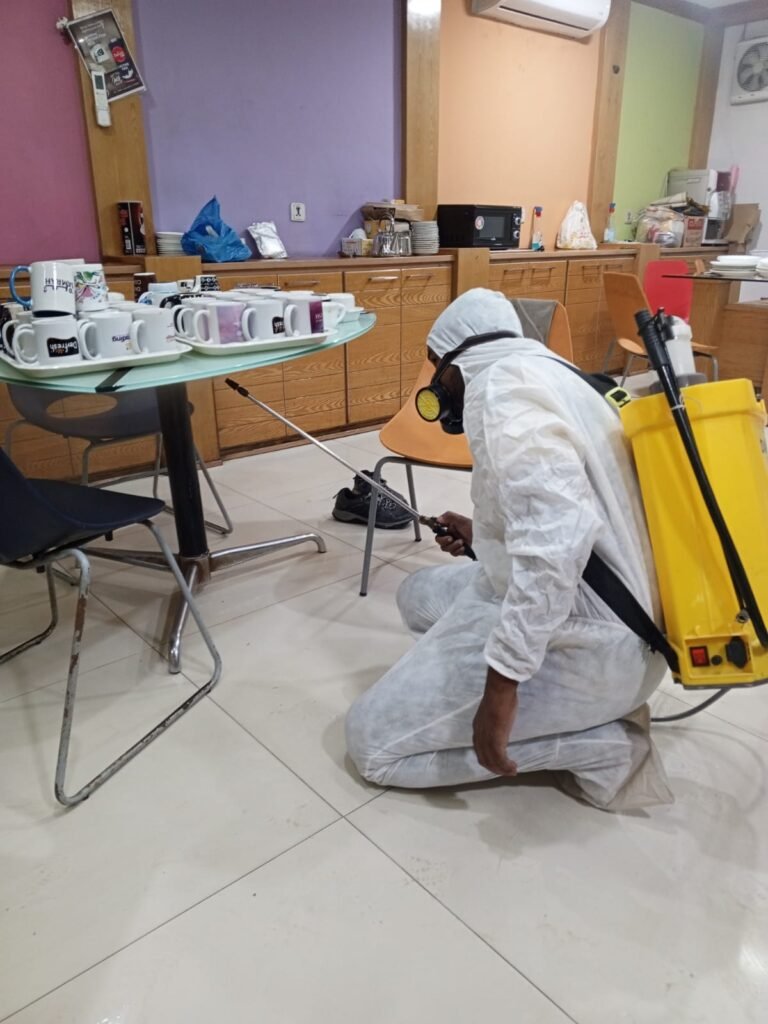
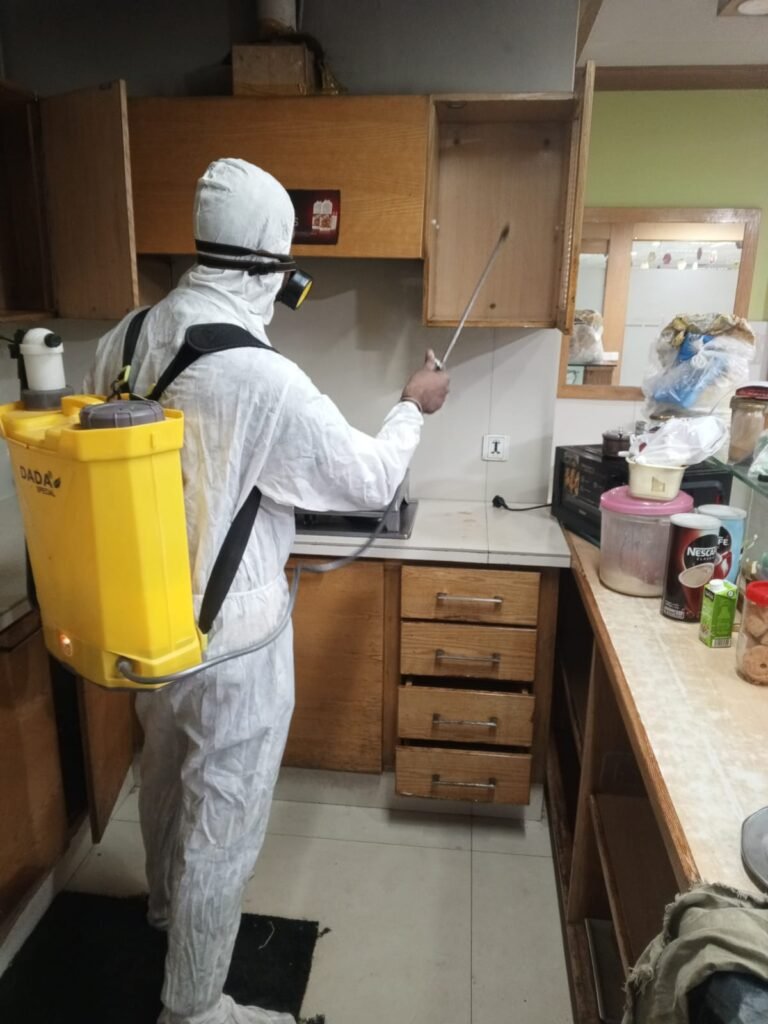
A home checklist handles most of the problem, but a professional visit adds a layer that’s hard to match on your own. In a typical visit, a trained technician uses a backpack fogger, or a truck-mounted fogger for larger compounds, to release a fine mist, essentially an aerosol spray of insecticide, that reaches adult mosquitoes hiding in shaded corners a broom or spray bottle never gets to. Alongside fogging, larvicide gets applied directly into standing water you can’t fully drain — breeding points like tanks, drains, and gutters — so it disrupts the breeding cycle by targeting mosquito eggs and larvae before they ever become adult mosquitoes.
The other piece is a residual spray, which leaves a residual barrier, essentially a long-lasting barrier, on surfaces like walls, grilles, and shaded ledges rather than just clearing the air for a moment. Timed treatment matters here — a technician familiar with local mosquito species activity will plan a visit around when Aedes mosquitoes are actually most active, not just show up at a random hour. This combination of targeted treatment, source reduction around the property, and simple follow-up visits is what turns a one-off fogging session into an actual prevention plan instead of a temporary fix. If you would rather have this handled for you, Noor Pest Control’s dengue spray service in Karachi combines fogging, larvicide, and residual spray in one layered plan, and any professional treatment through us sits under our guarantee.
Dengue Prevention in Apartments, Housing Societies and Schools
Dengue does not stay inside a single flat, which is why housing societies, apartments, condominiums, townhouses, and dormitories all need a shared plan rather than everyone checking their own balcony alone. In high-density housing and high-rise residential blocks especially, a single water tank on the roof or an ignored corner of the common areas can undo a hundred households’ good habits overnight. Indoor spraying and outdoor spraying both matter here, along with plain ventilation after any treatment, larvicide application in shared breeding points, and honest breeding site identification carried out by facility staff rather than left to guesswork.
The strongest results come from community-based activities: educational talks for residents, organised cleaning campaigns before the season peaks, and simple home visits or regular inspection rounds that catch rooftop water tanks and common corridors before they turn into breeding grounds. Schools deserve the same attention, since young people with basic dengue literacy tend to carry those habits home and repeat them to their families. Whether it’s shared spaces in a housing society or a school compound, community engagement works better than any single household acting alone. Our teams cover housing societies in DHA, Gulshan-e-Iqbal, and Gulistan-e-Johar for exactly this kind of shared seasonal plan.
Keeping Dengue Out of Your Home All Season Long
Getting rid of mosquitoes once is easy; keeping them away for the rest of mosquito season is the real challenge. That takes recurring inspection and weekly maintenance rather than a single big clean-up, plus a bit of seasonal vigilance every time an unexpected rain spell rolls through — rainy spells are exactly when water accumulation catches people off guard again. Simple monitoring, a few routine checks, and preventive habits repeated without excuses do more over three months than any one-time effort.
Consistency is what actually prevents re-infestation: build inspection into your household routine the same way you’d handle any other chore, keep an eye out through occasional follow-up checks even after a professional visit, and treat long-term protection as a shared responsibility with neighbours rather than a solo job. Neighbourhood cooperation matters, since one uncleaned rooftop nearby can undo your own careful prevention in a matter of days, and ongoing prevention is simply calmer than dealing with an outbreak after the fact. If you want a professional visit added to your own routine before the season peaks, call Noor Pest Control on 0330-8373324.
Frequently Asked Questions
Dengue machar kab kaatta hai?
The Aedes mosquito behind most dengue cases bites mainly during early morning and a couple of hours before sunset, indoors and outdoors, which is different from common night-biting mosquitoes.
Kya fogging se dengue khatam ho jata hai?
Not on its own. Fogging kills adult mosquitoes in the moment, but new mosquitoes will keep hatching unless standing water and breeding sites around the home are also removed and checked weekly.
Machar bhagane ka tarika kya hai?
Start by removing standing water from coolers, plant trays, buckets, and tyres, add window and door screens, and keep drains and rooftop tanks covered so mosquitoes have nowhere left to breed.
When does dengue season start in Karachi?
Karachi’s dengue season typically follows the monsoon, with cases rising from September and staying elevated through October and November as breeding conditions peak.
What are the most common mosquito breeding places at home?
Coolers, flowerpots and plant trays, roof tanks without proper lids, old tyres, and AC drip trays are among the most common mosquito breeding places at home in Karachi.
Do apartments and housing societies need a separate dengue prevention plan?
Yes. A shared water tank, common corridor, or unchecked rooftop in a housing society can undo individual households’ efforts, so community-level checks and cleaning campaigns matter alongside personal prevention.
When should I see a doctor about dengue symptoms?
See a doctor promptly if a high fever develops in the two weeks after being in a dengue-prone area, or if warning signs such as persistent vomiting, bleeding gums, or severe abdominal pain appear.