If you have started scratching in the night and found small reddish-brown marks on your sheets, you are probably dealing with khatmal — the Urdu common name for what English speakers call bed bugs. A khatmal is a tiny, wingless, blood-feeding insect, roughly the size of an apple seed, that behaves like a nocturnal parasite: it hides during the day in furniture and cracks, then feeds at night while you sleep. In Karachi, khatmal ka khatma (getting rid of bed bugs) is a common household infestation worry, and for good reason — once this common household pest and biting insect settles into a bed frame, mattress or sofa, it rarely leaves on its own. If you searched for bed bugs in Urdu, the short answer is khatmal — and this guide walks through khatmal kaise khatam karen (how to get rid of bed bugs), from the first signs to full prevention, in plain English. If you would rather talk it through with a technician, Noor Pest Control can be reached on call or WhatsApp at 0330-8373324.
Most adult khatmal are oval shaped and brown to reddish brown in colour, though newly hatched ones look almost colourless. As a pest, it is small enough to squeeze into seams and joints, which is exactly why khatmal ka khatma in Karachi homes takes more than a quick wipe-down — you are not just cleaning a stain, you are trying to remove a creature built to hide. Understanding what khatmal actually is makes the rest of this guide, including when to arrange bed bug treatment services in Karachi, much easier to follow.
Khatmal Ka Khatma: A Karachi Homeowner’s Guide to Bed Bugs
How to Identify Khatmal: Appearance, Bites and Hiding Spots
A full-grown, adult khatmal is oval shaped, flat and thin before it feeds, which is exactly what lets it squeeze into tight places like a credit-card-width crack. It measures about 5-7 mm — the size of an apple seed — and its colour runs from brown to reddish brown, becoming longer and redder right after feeding. Young ones, called nymphs, are translucent or whitish-yellow and can look almost invisible on light bedding, which is one reason a small infestation goes unnoticed for weeks. The first real clue is usually itchy bite marks in a line, often described as breakfast, lunch and dinner rows, though around 30 percent of people show no skin reaction at all, so skin marks alone are not proof either way; bites tend to appear on the arms, back, face, neck and legs, wherever skin touches the bed sheets overnight.
Beyond the bite, the clearest evidence is physical: dark stains on clothing and bedding, shed skins left behind as khatmal grow, tiny eggs tucked into fabric folds, and rusty stains or reddish stains on the mattress where a fed insect was crushed in the night. Their droppings show up as small dark dots that smear like ink on a damp cloth, sometimes alongside a faint sweet musty odor in a heavily used room, and the bite pattern itself can leave raised red welts in visible lines, which most people simply call itchy bites. As for hiding spots, khatmal favour the box spring, the piping and seams and tags of a mattress, cracks in the bed frame and headboard, the joints of chairs and couches, folds of cushions and curtains, drawer joints, electrical receptacles and other appliances, loose wallpaper and wall hangings, the junction where wall meets ceiling, and even the head of a screw — anywhere narrow enough to disappear into during the day.
Why Karachi Homes and Apartments Get Khatmal
Khatmal rarely starts as a Karachi-only problem — it usually hitchhikes in. Frequent travel brings it home inside luggage, backpacks and folded clothing after a stay in hotels, guest rooms or even a relative’s house, and it can just as easily ride in on personal items carried on crowded public transport. A second common entry point is furniture: secondhand furniture and used furniture bought from a furniture market, an old wooden bed, or a donated sofa can already be carrying khatmal, and they spread the moment that piece enters a bedroom with any clutter for them to hide in.
Karachi’s building style adds another layer of risk. In apartments and other multi-unit buildings, khatmal move along shared walls and through gaps between adjoining units, turning one flat’s infestation into a building-wide cross-infestation within weeks. Hostels, staff rentals and guest houses see the fastest turnover of people and belongings, which is exactly the pattern that lets khatmal migrate from room to room — they can sense human presence through carbon dioxide and will happily wait in a vacant room for months without feeding until a new tenant gives them a reason to feed again. It is a pattern our team sees repeat across bed bug treatment in DHA Karachi, bed bug treatment in Clifton, Karachi and bed bug treatment in Gulshan-e-Iqbal, Karachi bookings alike.
Home Remedies for Khatmal Ka Ilaj and Why They Often Fail
Search khatmal ka ilaj (bed bug remedies) online and you will find dozens of DIY methods, but most fall apart under real conditions. Essential oils have little scientific evidence behind them and act, at most, as a short-term deterrent rather than a cure. Rubbing alcohol kills on contact yet evaporates quickly and has no lasting effect, so it misses eggs hidden in seams — those eggs survive and simply hatch later. Baking soda has no scientific evidence supporting it either, since it just breaks down on contact with water, and ultrasonic devices have no effect on khatmal at all, making them completely ineffective despite the marketing.
The bigger issue is biology: khatmal are unusually resilient, and they retreat deep into cracks and crevices the moment they sense disturbance, which makes complete eradication with home products difficult for an ordinary household. This is exactly why most guides eventually point people toward professional help — it brings intensive methods and proven methods, including options for a whole house treatment, that a bottle from a shop simply cannot match. Real khatmal se chutkara, lasting relief from bed bugs, usually starts exactly where DIY attempts stop.
When You Should Call a Professional for Khatmal Ka Khatma
Certain warning signs mean it is time to stop testing home tricks and book a professional inspection. Watch for signs an infestation is spreading to multiple rooms, an established population that keeps coming back despite cleaning, or visible bugs during daytime crossing a wall in broad daylight — all of this points to a heavy infestation rather than a handful of stray bugs. If bites are recurring, the itching feels persistent, or you simply notice increasing bite marks each morning while it is clear that DIY is not working, that is your cue to call in a trained team rather than lose another week.
A proper severity assessment from a trained technician also protects you from guesswork — an escalating, growing population left untreated for another cycle only makes the eventual clean-up longer and more disruptive. Noor Pest Control backs its bed bug treatment with guaranteed work, with the terms set out plainly on that page, and the team can be reached on call or WhatsApp to arrange an inspection.
What Professional Khatmal Treatment Involves
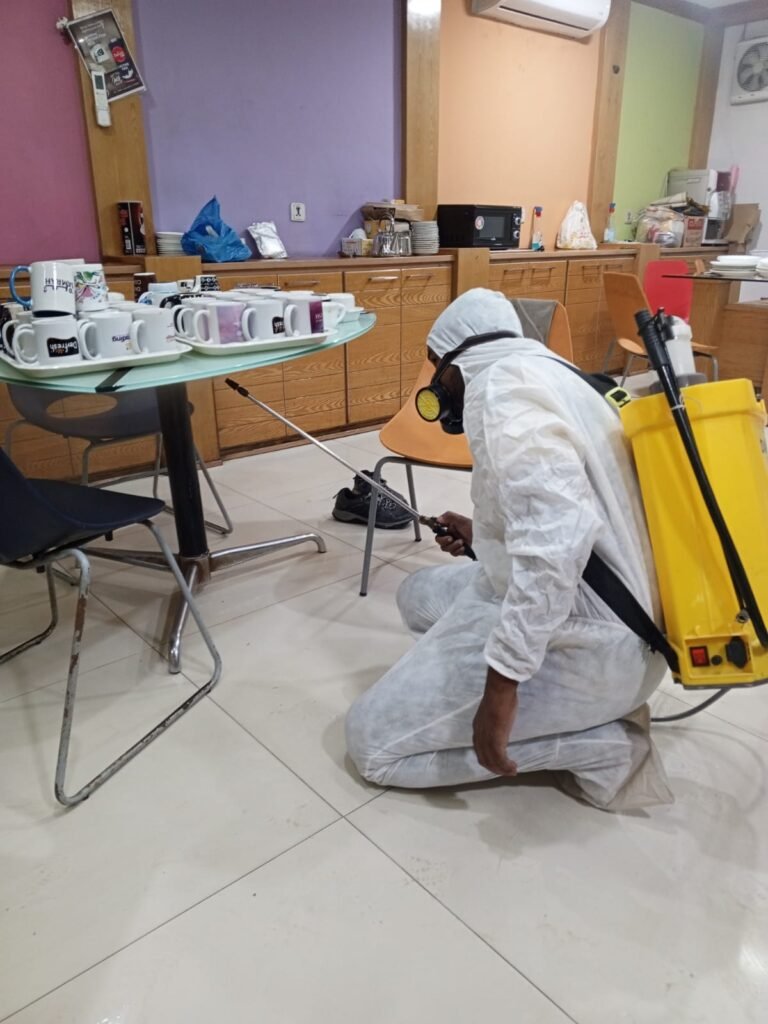
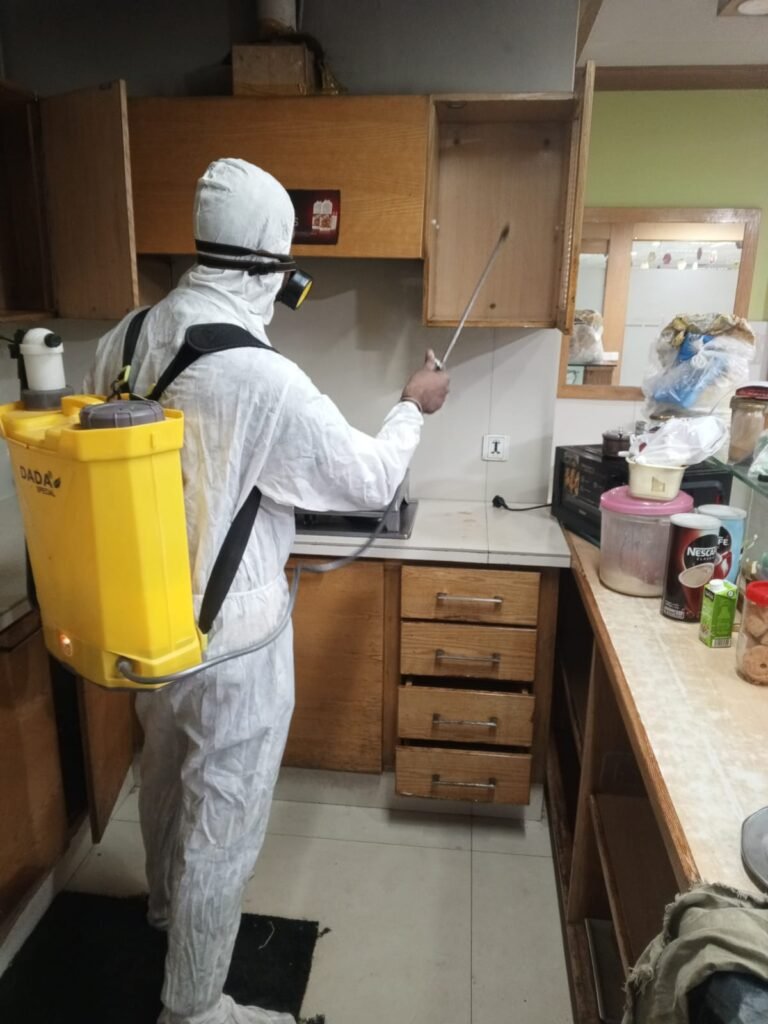
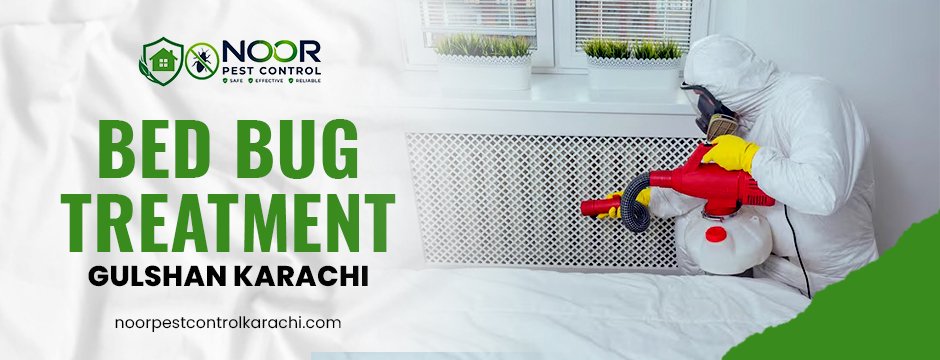
A trained technician starts with a close inspection and assessment of sleeping areas and nearby furniture, checking every known hiding spot — mattress seams, box springs, bed frames, headboards, baseboards, electrical outlets and other crevices — plus bedding itself for eggs, shed skins or fecal stains. That inspection shapes a treatment plan matched to the severity of the infestation, which for most Karachi homes means a combination of chemical treatment and heat treatment rather than relying on just one method.
Before the actual treatment application, the team walks you through pre-treatment preparation — clearing clutter, fitting mattress encasements, running a vacuum over seams, and washing what you can in a dryer on high heat for at least 30 minutes to heat treat and kill eggs at home, while the technician will seal cracks on site. Depending on how the problem behaves, treatment can run across multiple phases, mixing non-chemical treatment with pesticides where needed; the job always ends with a follow-up visit, monitoring the same spots to confirm the khatmal are gone, with further follow-up inspections scheduled if necessary.
Preparing Your Home Before Khatmal Treatment
A little preparation makes professional treatment far more effective. Start by running a thorough vacuum over floors, carpets, rugs, baseboards, bed frames, sofas and other furniture, reaching into every crevice where eggs might be sitting — this simply improves access for the technician. Immediately seal the vacuum bag inside a plastic bag and drop it in an outdoor trash bin so nothing gets a chance to escape back into the room.
Next, fit a mattress encasement and matching box spring encasement that are bedbug proof, with zippers that close fully and stay sturdy for at least one year of regular use. Take time to reduce clutter and declutter the bedroom, launder bedding and clothing at high temperature, and seal bags around anything you cannot wash right away — clean bedding and a tidy room simply give khatmal fewer places to reappear once treatment begins.
Preventing Khatmal from Coming Back
Once khatmal ka khatma is complete, a few habits keep it that way. Keep bedding tucked onto the mattress so nothing trails onto the floor, and place interceptors under each of the bed legs — a simple cup-style trap that catches anything trying to climb back up.
Build in a periodic inspection of your sleeping quarters and any nearby furniture every few weeks, especially after guests, travel or a new secondhand piece enters the house — an early inspection catches a fresh khatmal problem while it is still small enough to deal with quickly, well before you are back to arranging khatmal ka khatma from scratch. If the early signs do return, call or WhatsApp Noor Pest Control on 0330-8373324 and describe what you have found.
Frequently Asked Questions
Khatmal in English kya hai?
Khatmal is the Urdu word for bed bugs, a small, wingless, blood-feeding insect that hides in mattress seams, bed frames and furniture cracks during the day and feeds at night.
Khatmal kahan se aate hain?
Most khatmal travel in through luggage after a trip, secondhand furniture, or shared walls in apartments, hostels and rentals with high tenant turnover.
Kya khatmal khud khatam ho jate hain?
No. Khatmal do not disappear on their own; without treatment, an infestation usually spreads to more rooms rather than fading out.
Khatmal ke katne ki pehchan kaise karein?
Look for itchy red welts in a line on the arms, neck or legs, along with rusty stains, dark droppings or shed skins on the mattress and bedding.
Kya ghar ke totkay khatmal ko pakki tarah khatam kar sakte hain?
Rarely. Home remedies such as rubbing alcohol or essential oils may kill a few bugs on contact but do not reach eggs hidden in cracks, so the infestation usually returns.
Professional khatmal treatment mein kya hota hai?
A trained technician inspects the home, builds a treatment plan around the severity of the infestation, and treats room by room with a follow-up visit to confirm the khatmal are gone.
Kya khatmal ka ilaj bachon aur pets ke liye theek hai?
Ask the technician before the visit. The team explains which rooms are treated, how long children and pets should stay out of them, and when bedding can go back on the bed, so you can plan the day around the treatment.
Khatmal dobara wapis aane se kaise rokein?
Keep bedding tucked away from the floor, use bed-leg interceptors, inspect the sleeping area periodically, and check any secondhand furniture before it enters the house.